
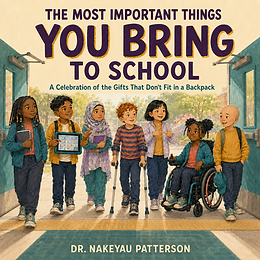
The Most Important Things You Bring to School
Book 1 of 6 • Paperback
A picture book for ages 4–10 about the gifts children bring to school that cannot fit in a backpack.
From questions and ideas to names, home languages, different bodies, and ways of communicating, this illustrated read-aloud makes room for each child’s whole self. Its message is simple: children belong before they achieve, help, or shine—and they deserve support on difficult days, too.
Share it during a classroom morning meeting, a small-group conversation, or reading time at home. Use the story to talk about curiosity, respect, asking for help, and making room for one another.
The 40-page book includes a “What Do You Bring?” reflection activity and a note to the school community, with ways for children to respond through speaking, signing, drawing, or writing.

Your Place Is Still Here
Book 4 of 6 • Paperback
A reassuring picture book about returning to school after an absence, reconnecting with classmates, and finding a manageable place to begin.
Through gentle rhyme, the story explores the worries a child may bring back through the classroom door: changed friendships, questions about where they have been, and missed work that feels like a mountain. A warm greeting, a trusted adult, and a classmate’s small welcome help make the next step possible.
The story makes room for privacy, mixed feelings, and time to reconnect. Children can ask for help without having to explain every detail of their absence.
Inside you’ll also find “If You Are Returning,” “When Someone Comes Back,” and “A Dignity-Centered Return,” with practical language and suggestions for children, classmates, and adults.
Share it as a read-aloud at home or school to explore welcoming others, asking where to start, and making room for someone’s return. The discussion page invites children to talk, point, draw, or write.


Kai & Zoe Worry Sometimes Too
Tomorrow, Zoe’s class will share their work—and tonight, she cannot stop wondering what might go wrong. What if her picture is not good enough? What if she forgets her words?
Kai listens, stays beside her, and reminds her that she can take one small step while worry is still there. At school, a trusted teacher helps Zoe notice what she is feeling, breathe slowly, and choose a helpful thought.
This picture book follows the sisters through the worry that can come with trying something new or speaking in front of others. When Kai faces a worried moment of her own, Zoe has something to share, too.
Read it together to talk about body signals, mistakes, asking for support, and finding a manageable next step. The story gives children and adults simple language to return to: notice the worry, breathe slowly, and choose a helpful thought.

The Night We Got Lost
Kai arrives at Camp Northstar determined to prove she can lead. Then a strange blue trail marker appears, a recording warns that someone changed the course, and the team’s tracker counts five people when six are standing together.
With Zoe and their friends beside her, Kai must work out which directions—and which voices—they can trust. Altered signs, unreliable messages, and a missing name turn Leadership Weekend into a mystery that demands more than a confident person holding the map.
This chapter-book adventure combines suspense, friendship, and the group’s quick humor with questions about courage, access, and listening. Each friend notices something different, while Kai faces the pressure to look certain when she is afraid.
The book closes with eleven “Questions to Carry with You” about clues, teamwork, fear, trust, and repair, plus an author’s note on making room for what others know.
Book 3 in The Room for Everybody Series; the story can also be read on its own.


Kai & Zoe Learn to Solve Problems Workbook (Full-Color Edition)
Ages 5–10 · Full-color interior · Everyday choices, safe plans, and trying solutions.
Help children explore problem-solving and everyday choices through full-color activities with Kai and Zoe, focusing on decisions that are kind, safe, and smart.
Read prompts together and support talking, drawing, or writing as needed.
Choosing an edition? The black-and-white and full-color books share learning themes, but their activity selections and page layouts differ. Preview the edition you are considering.

Kai & Zoe Learn to Calm Down Workbook
Ages 4–8 · Black-and-white interior · Big feelings and calming choices.
Explore big emotions with Kai and Zoe in a workbook introducing simple calming strategies, giving children a starting point for learning how to manage their feelings.
Designed for use with adult support, with optional coloring. Read prompts together and help with drawing or writing as needed.
Choosing an edition? The black-and-white and full-color books share learning themes, but their activity selections and page layouts differ. Preview the edition you are considering.

Kai & Zoe Safe Bodies Workbook
Ages 4–8 · Black-and-white interior · Personal space, boundaries, and body safety.
Explore body safety with Kai and Zoe through simple activities about safe touch, personal space, and boundaries, giving children opportunities to learn about these topics.
Designed for use with adult support, with optional coloring. Read prompts together and help with drawing or writing as needed.


You Belong at the Table
A practical guide for parents and caregivers navigating evaluations, IEPs, Section 504 plans, and school meetings. Understand your role, organize your concerns, and prepare for conversations about your child’s education.
What you’ll find inside: plain-language explanations, fictional parent scenarios, adaptable meeting language, and practical next steps. Dr. Nakeyau Patterson connects the school process to questions families can bring to the table.
The Parent Toolkit includes an Evaluation Request Template, Meeting Preparation Worksheet, IEP Connection Check, Service and Accommodation Log, and Parent Advocacy Boundary Plan.
Prepare with purpose: identify priorities, gather useful records, include your child’s perspective, and develop questions for the meeting.
Examine the plan: consider how identified needs connect to goals, accommodations, services, responsibilities, and progress measures.
Follow through: record decisions, organize implementation concerns, and clarify what needs attention after the meeting.
The book also considers gifted and twice-exceptional learners, student voice, and the emotional demands of advocacy. Throughout, it distinguishes actions parents can take from decisions they may influence and circumstances beyond their control.
Read from the beginning or turn to the chapter that fits your next step. Open the sample to explore the author’s approach before choosing your copy.


The Teachers We Could Have Kept
Examine teacher retention through the conditions of the job. Written for teachers, school and district leaders, and educators considering a return, The Teachers We Could Have Kept connects decisions about staying or leaving with workload, safety, professional judgment, compensation, mentoring, and access to support.
Dr. Nakeyau Patterson combines research with clearly identified hypothetical examples to examine what teachers needed, who could act, and whether promised support reached the classroom. Chapters explore the expertise and instructional continuity schools lose, why a better salary may leave important concerns unresolved, and what needs to change before inviting experienced educators back.
Practical tools include a decision sheet for moving a concern toward a clear response and a Performance and Support Review for examining teacher practice alongside preparation, resources, and school commitments. A concern-based reading guide helps you begin with the question most relevant to your situation.
Use the book to describe a need more clearly, assess whether a response changes the work, or shape a retention conversation around specific responsibilities and follow-through. It also makes room for the reality that leaving may remain the right decision, even when a school responds well.

A Seat Without a Say
Being invited to the table does not always mean having a say. Written for Black professionals and educators, this book examines the gap between visible inclusion and meaningful influence. Attributed research, a fictional teacher’s experience, reflection tools, and adaptable language help readers clarify responsibilities, trace decisions, and weigh whether to stay, narrow a role, step back, or leave.


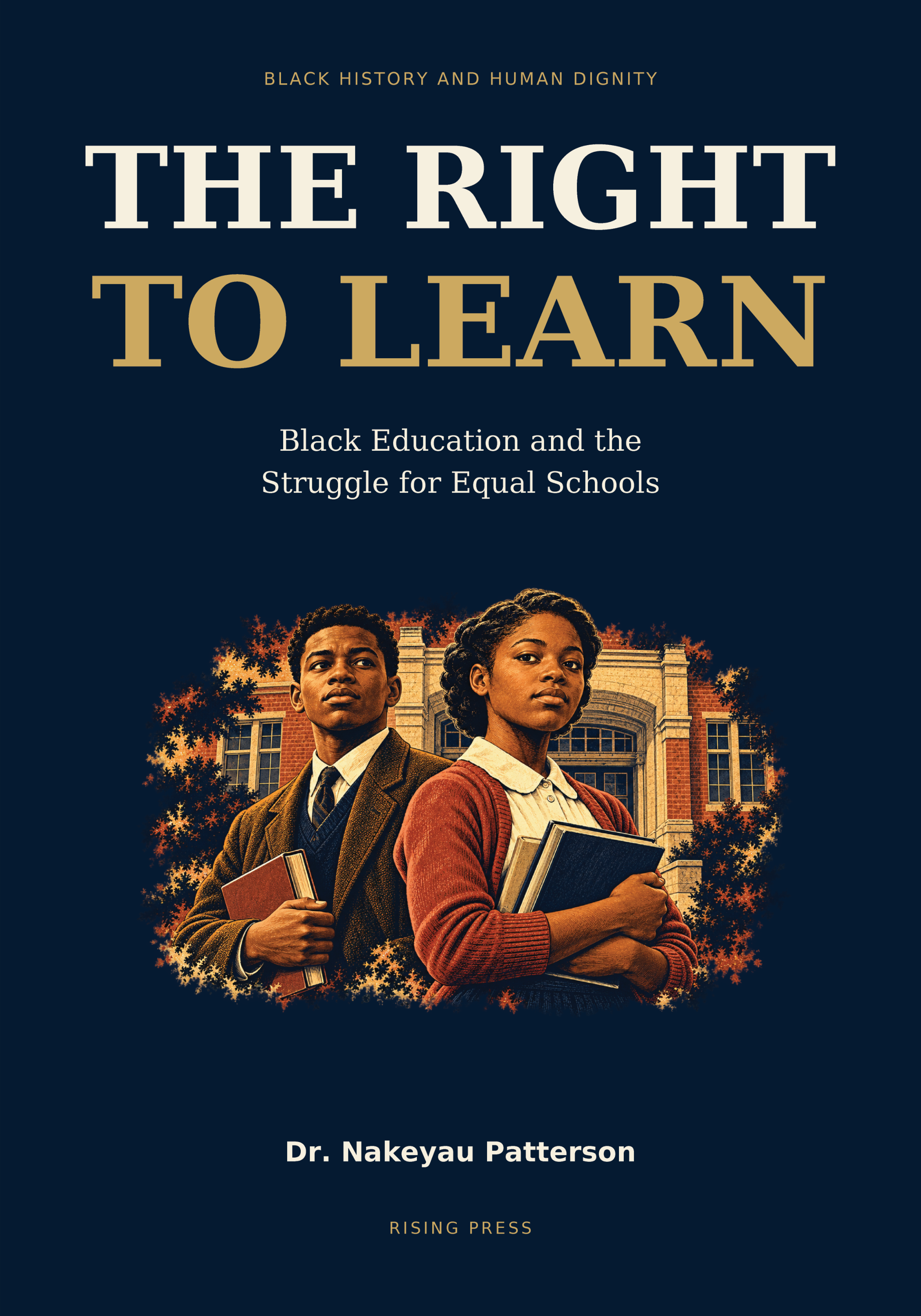
The Right to Learn
Who built opportunities to learn, and what did equal schooling require? Written for grades 6–12, with adult support for younger readers, this book explores Black educational traditions, community-built schools, the work of teachers, student organizing, Brown v. Board of Education, and the decisions that followed desegregation. Twelve chapters include guiding questions, reflection questions, short inquiries, and teacher notes, supported by a timeline, vocabulary, and source notes.

Goodness Has a Voice
52 illustrated reflections on turning compassion into everyday courage. Each reading pairs an original line with a question and one small action, inviting readers to listen closely, speak with care, set honest boundaries, and make room for others. Read one each week or open to the reflection you need today.

One Moment Is Not My Whole Story
Book 2 of 6 • Paperback
When a worksheet tears and a voice rises, the whole classroom notices. This rhyming picture book for ages 4–10 invites readers to look beneath a difficult moment and see the child who still needs understanding, support, and belonging.
As the story explores a child’s fear and difficulty getting started, a calm teacher holds clear boundaries and helps make the next step possible. One Moment Is Not My Whole Story brings compassion and accountability into the same conversation, with language for asking for help, keeping people safe, making amends, and trying again.
Share it at home or in a classroom conversation about a hard day, a misunderstanding, or repairing harm. The closing “Look Beneath the Moment” activity invites children to explore what happened, feelings, needs, safety, and possible next steps through talking, pointing, drawing, or writing. Children may skip any question.
A “Note to the School Community” offers adults a brief reflection on protecting everyone, preserving dignity, and supporting responsibility and growth.

Wait—Did Anybody Ask Us?
Book 5 of 6 • Paperback
The grown-ups are planning a night at school, but Nora’s drawing is still inside an unopened suggestion box. She imagined a place where guests could build alongside the children. Has anyone heard what she means?
When Nora speaks up, Ms. Reed makes time to listen. Children share through talking, drawing, and typing, bringing practical suggestions and wonderfully impossible ideas. The question becomes what adults will do with the ideas they receive.
Told in rhyme with playful school-night mishaps, this story explores listening carefully, explaining limits, and following through. It gives families and classrooms a starting point for conversations about children’s voices and adults’ responsibility to respond.
The closing pages include story discussion questions and “Our Ideas, Our Next Step,” a shared planning activity that records an idea, what to try, who will help, and when to talk again. “For the Grown-Ups” offers guidance on participation, clear next steps, and returning with an answer.

Kai & Zoe Ask, “Why Not Me?”
Future Possibilities Week fills the classroom with big ideas. Zoe’s page is blank. Kai has ideas of her own, but wonders whether her dreams are too big for her.
With encouragement from their older sister, Nia, Kai and Zoe explore four steps: Notice, Imagine, Learn, and Begin. They look at what they enjoy, the problems they care about, and the people they can learn from. A school project gives them a chance to listen, test an idea, and keep improving when the first attempt needs work.
Read together to talk about uncertainty, interests, asking for support, and beginning before you have every answer. The closing “Your Turn” pages invite children to draw or write about their interests, imagine possibilities, prepare questions for someone they could learn from, and choose a manageable next step.
“My Why Not Me? Plan” and “A Promise to Myself” bring those reflections together.

Kai & Zoe Know It’s Okay to Ask for Help
After frightening disruptions at school, Zoe notices her heart racing and her tummy tightening. A teacher’s reassurance helps, but she still has questions about what will happen if another difficult moment begins.
With encouragement from Kai and support from adults at school, Zoe learns a plan: Notice, Tell, Move, and Keep Telling when she still needs help. Her conversations give words to feelings and needs that can be hard to explain.
This illustrated story opens a conversation about speaking up, seeking support, and listening when a child says something does not feel right.
Read together to discuss the body clues Zoe notices, the people she turns to, and how adults can help. Pause to consider what a caring response could sound like.

Room for Everybody
Kai likes knowing where things belong. But with her older sister away at college and Grandma Kay suddenly moving in after a burst pipe, her familiar routines—and her treasured art corner—are changing.
School is no easier. Her friendship with Laila feels different, and Kai is eager to help her new classmate, Mateo. When their class begins the Community Table project, she sees the perfect chance to organize something beautiful. Then she discovers that a good plan can leave someone else’s wishes unheard.
Room for Everybody follows Kai through family adjustments, awkward friendships, and the difference between offering help and taking over. Humor, lively conversations, and ordinary objects with unexpected meaning bring questions about privacy, fairness, and belonging into everyday life.
Read it independently or together to talk about asking before helping, saying what you need, and making space for another person’s story. This first book introduces the family and school community at the heart of The Room for Everybody Series.

The Prank Nobody Pulled
A banana wearing a graduation cap is only the beginning of Anniversary Week at Riverview. A prankster signing notes as “Nobody” has everyone talking—until the school’s time capsule disappears from a locked display case.
Kai has already received a thank-you note for a job she has not done. Now she and her younger sister, Zoe, must sort through misplaced props, strange messages, and accounts that refuse to line up. Their friends have explanations, but an explanation is not always proof.
With Amara, Jamal, and the rest of the group, Kai tries to work out what people actually saw, what they assumed, and how her own actions fit into the mystery. Humor, family banter, and small clues keep the investigation moving as suspicion starts to affect familiar friendships.
The fourth book in The Room for Everybody Series tells a complete mystery while its returning characters continue to grow. Open the sample to meet the first suspect and begin following the clues.


Kai & Zoe Social-Emotional Learning Workbook (Full-Color Edition)
Ages 5–10 · Full-color interior · Feelings, friendship, worry, and everyday problem-solving.
Help children explore feelings, friendship, worry, and everyday problem-solving through full-color activities with Kai and Zoe.
Inside the workbook, illustrated situations give children something concrete to talk about, while prompts invite them to draw, write, and reflect. The reading sample includes the “Feelings and Situations” page, with everyday moments such as joining a game and receiving help.
Use a page together at home or in a classroom conversation. Invite the child to notice what is happening, name a possible feeling, and discuss what might help. Read prompts aloud or support drawing and writing as needed.
This is the full-color paperback edition. Open the sample to see the page design and activities before choosing your copy.
Choosing an edition? The black-and-white and full-color books share learning themes, but their activity selections and page layouts differ. Preview the edition you are considering.

Kai & Zoe Learn to Solve Problems Workbook
Ages 4–8 · Black-and-white interior · Everyday choices and exploring solutions.
Explore problem-solving and decision-making with Kai and Zoe in a workbook focused on simple strategies children can use when making good choices.
Designed for use with adult support, with optional coloring. Read prompts together and help with drawing or writing as needed.
Choosing an edition? The black-and-white and full-color books share learning themes, but their activity selections and page layouts differ. Preview the edition you are considering.

Kai & Zoe Social-Emotional Learning Workbook
Ages 4–8 · Black-and-white interior · Feelings, friendship, worry, and everyday problem-solving.
A workbook of activities focused on understanding feelings, managing worry, building friendships, and solving problems, bringing everyday social and emotional topics together for children.
Designed for use with adult support, with optional coloring. Read prompts together and help with drawing or writing as needed.
Choosing an edition? The black-and-white and full-color books share learning themes, but their activity selections and page layouts differ. Compare the age guidance and interior format before choosing.

Learning at Home, Belonging Everywhere
A guide for homeschool and virtual-school families who want to support friendship, social confidence, and community while respecting each child’s needs.
Dr. Nakeyau Patterson explores the difference between being around other people and feeling known, welcome, and connected. The book considers children’s interests, energy, sensory needs, past experiences, and preferred ways of building relationships.
What you’ll find inside: the Belonging Everywhere CONNECTED Framework, practical conversation language, examples for different children, and chapter prompts for noticing, talking together, and trying one manageable step.
Build connections that can grow: explore repeated contact, shared interests, moving from an activity partner toward friendship, and helping children find words for joining in, setting boundaries, and handling disagreements.
Make room for the whole family: consider sustainable schedules, recovery time, siblings’ different needs, and parents’ own sense of belonging.
The Virtual-School-Plus Plan begins with three questions: what is already working, what does this child need now, and what is one manageable next step? Use it to plan community and friendship opportunities around the learning your child already does.
Read from the beginning or turn to the concern your family is facing now.


#BatteredTeacher
Teachers deserve protection, fair review, and support that reaches the classroom. Examine harm directed at educators by students, parents, colleagues, and administrators. Research, attributed teacher accounts, clearly identified fictional scenarios, practical meeting questions, and a reusable response record help readers document concerns and ask for meaningful institutional follow-through.


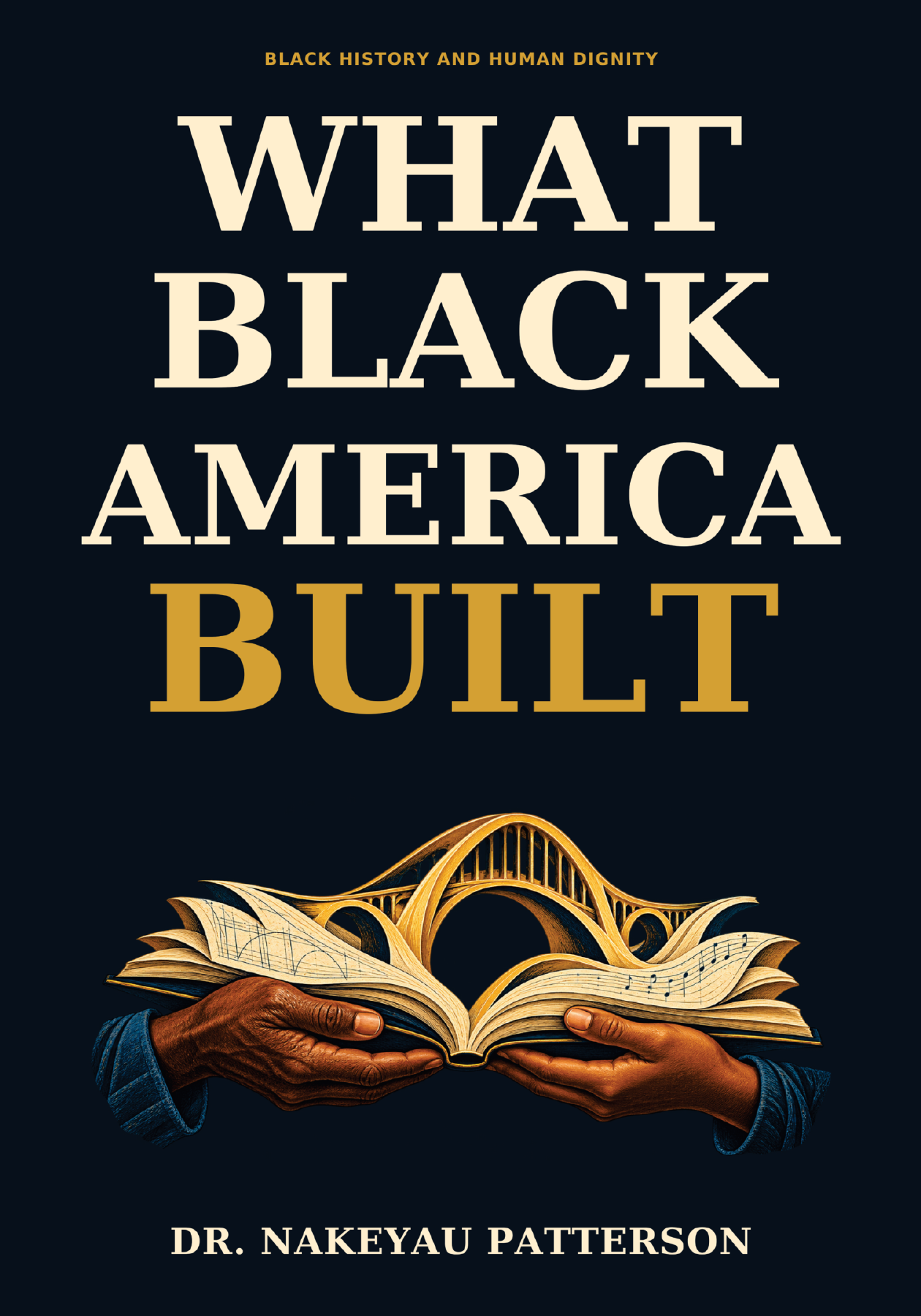
What Black America Built
Paperback now available on Amazon: $24.99 USD. The hardcover ($34.99 USD) is still publishing as of October 19, 2026. Read the free sample and choose your format below; check Amazon for current prices and availability.
Who made the things we use, the institutions we rely on, and the culture we share? Written for grades 6–12, with teacher or family support as needed, What Black America Built explores documented Black contributions to invention, science, medicine, technology, education, business, the arts, and everyday work.
Across 42 chapters, readers investigate specific contributions, examine historical records, and ask how credit is assigned. The book distinguishes inventing, improving, making, organizing, and teaching, while keeping a central principle in view: achievement is never a condition of human dignity.
The 364-page print edition includes reading routes, a chronology, glossary, source notes, and name and subject indexes. The opening chapter includes reflection questions, a short inquiry, and a teacher note.
Read a sample: preview the cover, title and copyright pages, full-book contents and reading routes, introduction, Chapter 1: Who Gets Credit, and supporting source-note pages. This 16-page PDF contains selected pages; the remaining chapters are not included.
Part of the Black History and Human Dignity series by Dr. Nakeyau Patterson. Paperback ISBN: 979-8-951901-70-5. Paperback ASIN: B0HNKYVJL8.

Different Tools for Different Days
Book 3 of 6 • Paperback
On Project Day, Micah’s class is making a paper garden. Around the room, classmates use headphones, picture directions, communication tools, and quieter spaces. Micah wonders: if everyone has work to do, shouldn’t everyone use the same things?
Ms. Torres welcomes his question while protecting each child’s privacy. When a rush of directions leaves Micah unsure where to begin, he starts to understand why different tools can make room for different learners.
Told in rhyme, this school story opens conversations about fairness, asking for help, and respecting the supports other people use. Its classroom examples show how a tool can help a child participate without doing the work for them.
After reading, “What Helps You Learn?” offers questions children can answer by talking, pointing, drawing, or writing. A note to the school community includes language adults can use to discuss support, dignity, and privacy.

We Can Disagree and Still Be Us
Book 6 of 6 • Paperback
Sam and Jay love making up shows together. But when their class chooses a story for a play, Jay wants dragons and Sam imagines a trip through space. Does being a good friend mean choosing the same thing?
In this rhyming school story, different ideas bring friendship, disappointment, and fair decisions into focus. Humor and familiar classroom moments invite children to think about sharing an honest preference, listening to someone else, and caring for a friend when their choices differ.
Read together before a group project or after a disagreement. “Let’s Talk About the Story” offers questions children can answer by speaking, showing, drawing, or writing—or choose to pass. The “Two Choices, Two Friends” activity gives partners a way to practice naming preferences and showing that they still care.
“For the Grown-Ups” adds guidance on making room for disappointment, addressing pressure to agree, and choosing a fair process.


Kai & Zoe Know They Are More Than Enough
Zoe has been hoping for an invitation from the four girls who always stay together at recess. But when they finally call her over, there is a condition: Maya cannot come. What happens when getting the place you wanted means leaving someone else out?
Across playground games and lunch-table choices, Zoe faces pressure to hide what she likes, distance herself from a friend, and stay quiet when something feels wrong. With Kai beside her, the story explores belonging, self-respect, and the work of repairing trust after a hurtful choice.
Read together at home or in class to talk about welcoming others, recognizing pressure to fit in, and choosing friendships that make room for differences. The closing pages extend the conversation with “Friend Group or Clique?”, signs of healthy friendship, trusted sources of support, and “What Can I Say?”—phrases children can practice for inclusion, boundaries, and asking for help.

The Space Between Us
The Constellation Challenge promises clues, teamwork, and friendly competition. For seventh grader Kai, it is also a chance to navigate changing friendships without trying to control every outcome.
Then a fourteen-second recording spreads through Riverview, making new student Amara appear to insult a classmate. Kai, Jamal, and Mateo know the clip leaves out crucial context. Proving that, however, could expose a private story Amara has not agreed to share.
As Team Orion investigates missing audio, anonymous posts, and an unfinished project from the school’s past, loyalty becomes more complicated than choosing a side. Who gets to tell a story? What does a correction owe the people harmed? And can helping a friend mean respecting what they choose to keep private?
With school mystery, family humor, and friendships under strain, The Space Between Us invites conversations about rumors, digital choices, consent, and rebuilding trust.
Book 2 in The Room for Everybody Series, following Room for Everybody.


Kai & Zoe Learn to Calm Down Workbook (Full-Color Edition)
Ages 5–10 · Full-color interior · Big feelings, coping choices, and body regulation.
Explore big feelings with Kai and Zoe through full-color activities focused on coping skills and body regulation, giving children opportunities to practice calming strategies.
Read prompts together and support talking, drawing, or writing as needed.
Choosing an edition? The black-and-white and full-color books share learning themes, but their activity selections and page layouts differ. Preview the edition you are considering.

How to Use Kind Words Workbook for Kids
Ages 4–8 · Black-and-white interior · Kind communication, friendship, and boundaries.
Simple social-emotional learning activities invite children to explore kind communication, friendship, and good choices, bringing attention to the words they use in their relationships with others.
Designed for use with adult support, with optional coloring. Read prompts together and help with drawing or writing as needed.

Kai & Zoe Learn What My Body Needs Workbook
Ages 4–8 · Black-and-white interior · Sensory needs, body signals, and self-regulation.
Join Kai and Zoe for simple activities exploring sensory needs, body signals, and self-regulation, helping children learn about what their bodies may be telling them.
Designed for use with adult support, with optional coloring. Read prompts together and help with drawing or writing as needed.

Our History, Our Possibilities
Paperback publishing · $14.99 USD. Publication is in progress as of October 20, 2026. Check Amazon for current availability and pricing.
Color a story, discover a contribution, and start a conversation. Our History, Our Possibilities invites families to explore Black history through 42 coloring scenes celebrating discovery, creativity, community, freedom, and everyday joy. Created especially for ages 8–12, the book also welcomes teens and adults to learn and color together.
Two-page activity spreads pair a short history with an original affirmation, a conversation starter, a creative prompt, and an illustration to color. Explore Mae Jemison’s work in space, Gwendolyn Brooks’s connection to everyday life and poetry, and the quiltmaking traditions of Gee’s Bend. Prompts invite children to imagine an experiment, write a short poem, or design a quilt square while sharing their ideas with others.
Use the book for family coloring time, shared reading, and conversations that connect the past with children’s interests and possibilities. Read the history notes aloud, talk through the questions, and draw or write together at your own pace.
Read a free preview: three sample spreads featuring Mae Jemison, Gwendolyn Brooks, and the Gee’s Bend quiltmakers. This three-page PDF presents six book pages in side-by-side spreads.
By Dr. Nakeyau Patterson. Paperback ASIN: B0HNR6HS1S.

Understanding Schooling Choices
A practical guide for parents and caregivers comparing schooling options and planning a learning day that fits their child and family. Explore traditional public, public charter, public magnet, and private schools alongside homeschooling and virtual learning.
What you’ll find inside: six color-coded sections, side-by-side comparison charts, fictional learning-day examples, and worksheets that turn broad preferences into questions about actual schools and programs.
Start with your child: identify strengths, essential needs, learning supports, and the experiences your child hopes to keep or change.
Look closely at the teaching: compare curriculum, try a sample lesson, and consider how teachers and caregivers will explain, check, and support learning.
Plan the whole day: examine schedules, materials, transportation, costs, adult availability, and opportunities for friendship. School-visit questions help families ask how support and communication work in practice.
Prepare for a change: use application records, deadline tracking, a readiness checklist, and a first-month check-in plan to organize the transition and review how it is working.
Written by Dr. Nakeyau Patterson, this guide draws on her experience as a public-school teacher and a parent across several schooling arrangements. Read in order or use the question finder to begin with your family’s next decision.


A Page for the Teacher
You make room for students all day. Here is a page for you. Explore 180 undated readings that pair a daily affirmation with a brief reflection and an optional question—no written response required. Follow the flexible August-to-May school-year journey or choose a reading for the day you are having.


We Were Always Whole
A fraction could change political power. It could never measure a person’s worth. Written for middle and high school readers, this book explains the Three-Fifths Clause and explores Black petitions for freedom, Reconstruction, schooling, and family memory. A timeline, glossary, discussion guidance, and source notes support thoughtful reading at home and in classrooms.
